 Cuepoint
Cuepoint Blog
Read this before the next revision.
Short, practical guides for getting useful notes, keeping versions clear, and making confident listening decisions.
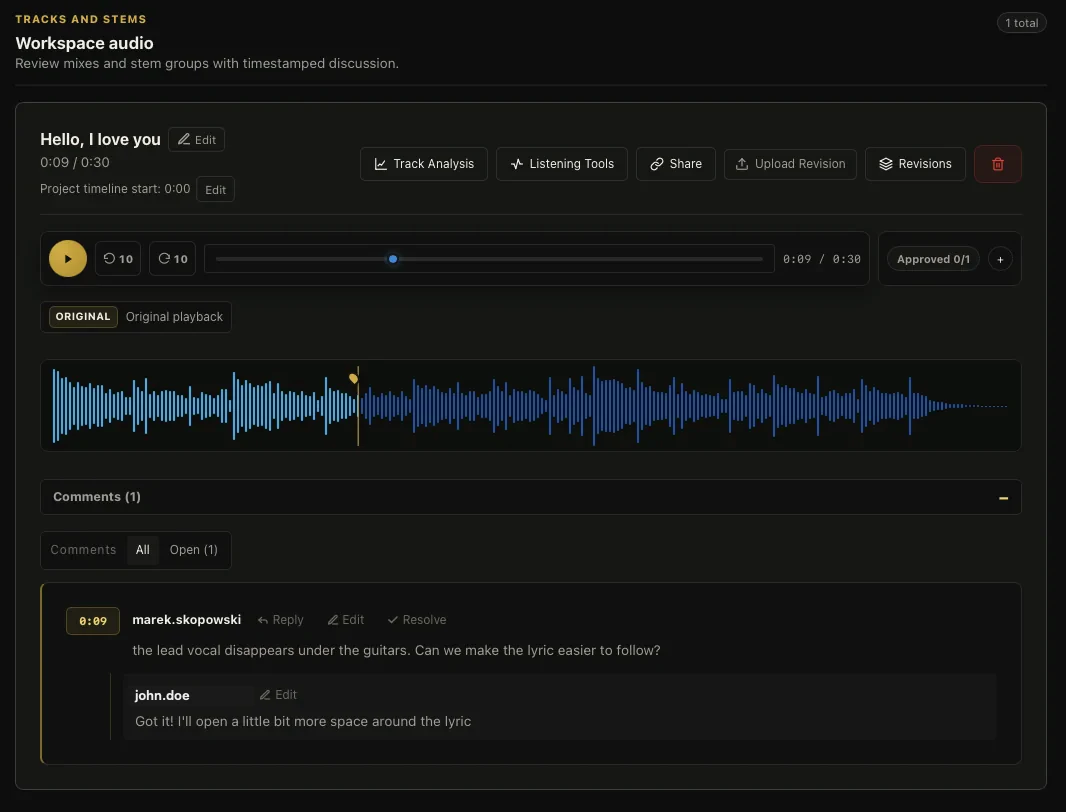
How to Give Actionable Mix Feedback
Turn vague reactions into specific notes a producer can understand and act on.
Read the guide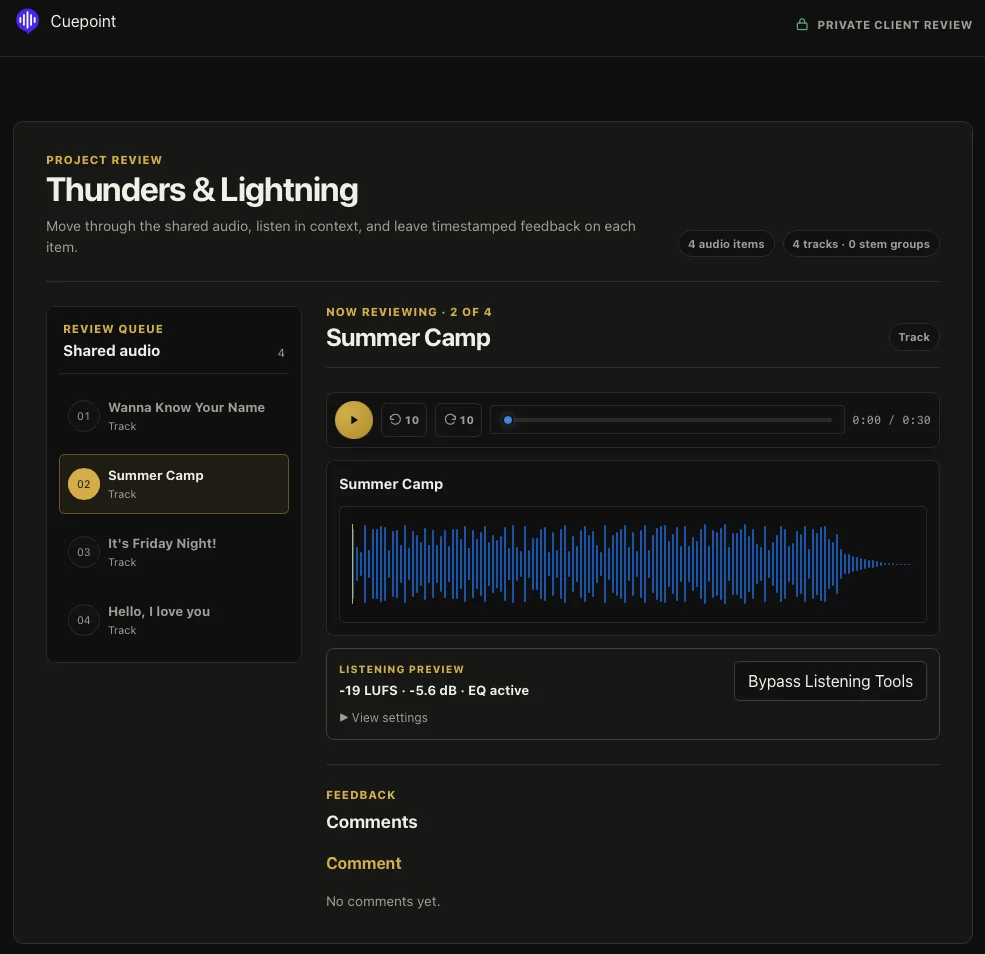
The Best Way to Collect Client Feedback on Audio
Keep the file, comments and next decision together instead of chasing several channels.
Read the guide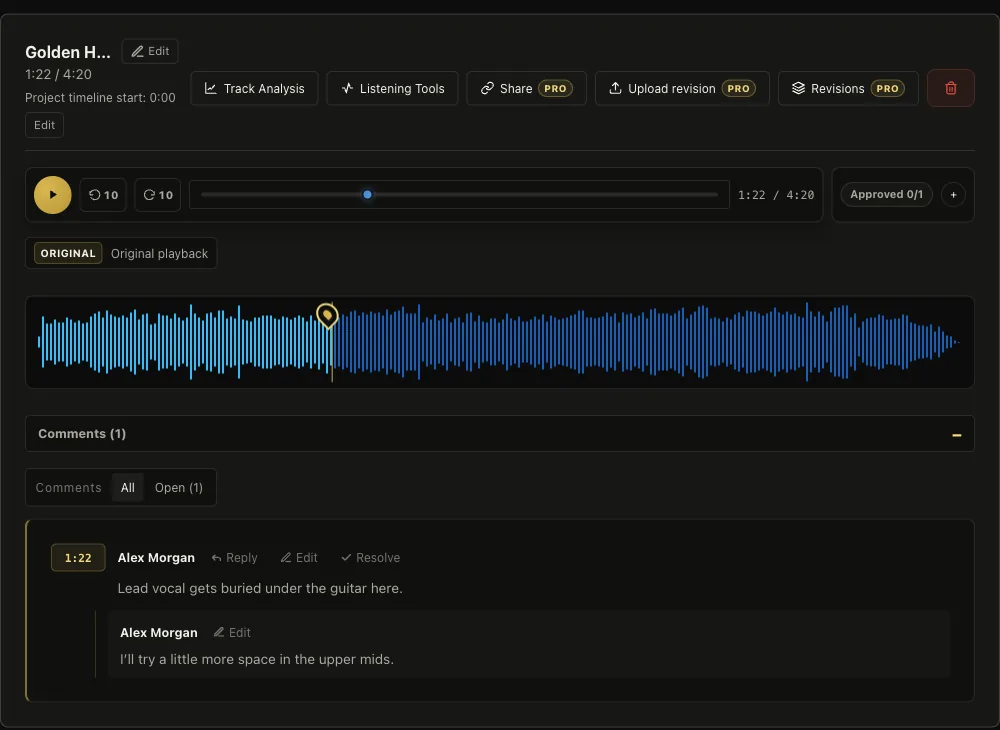
Timestamped Audio Feedback: Why It Speeds Up Revisions
Remove the first round of clarification by connecting every note to the sound.
Read the guide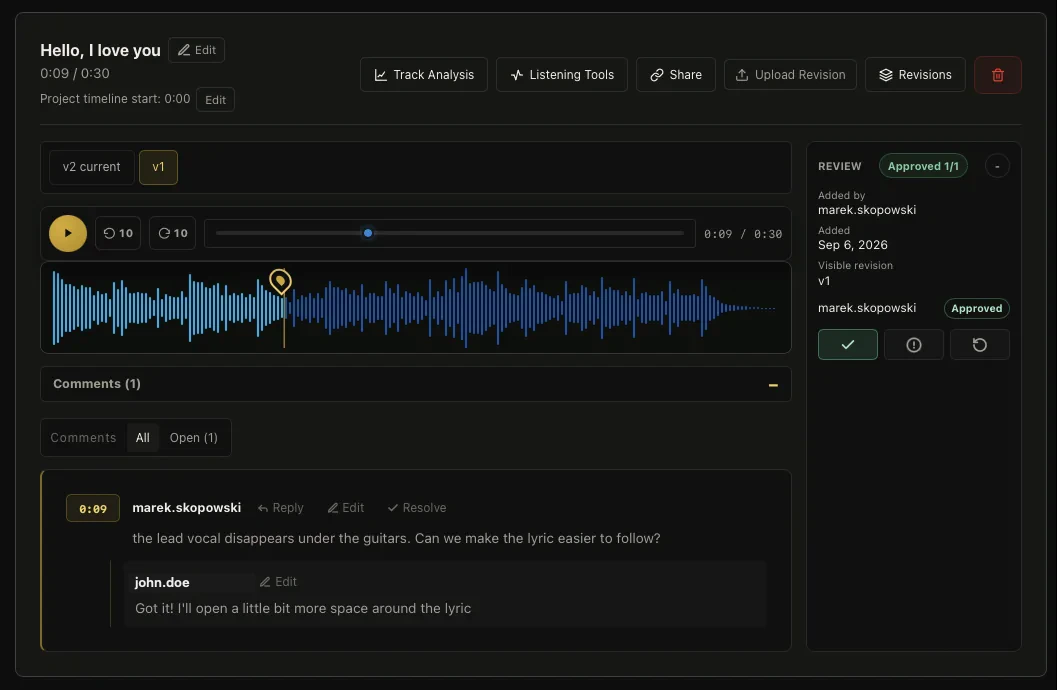
A Simple Mix Revision Workflow for Producers and Clients
A repeatable path from first listen to focused notes, revision and approval.
Read the guide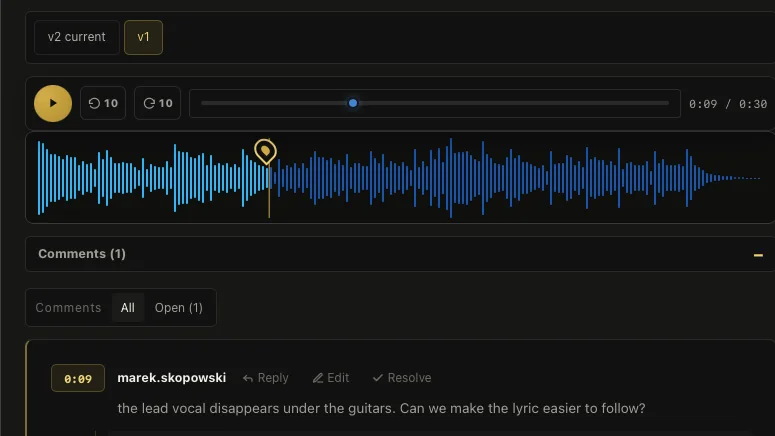
How to Stop Naming Files final_final_v3.wav
Use one track identity and a visible revision history instead of filename archaeology.
Read the guide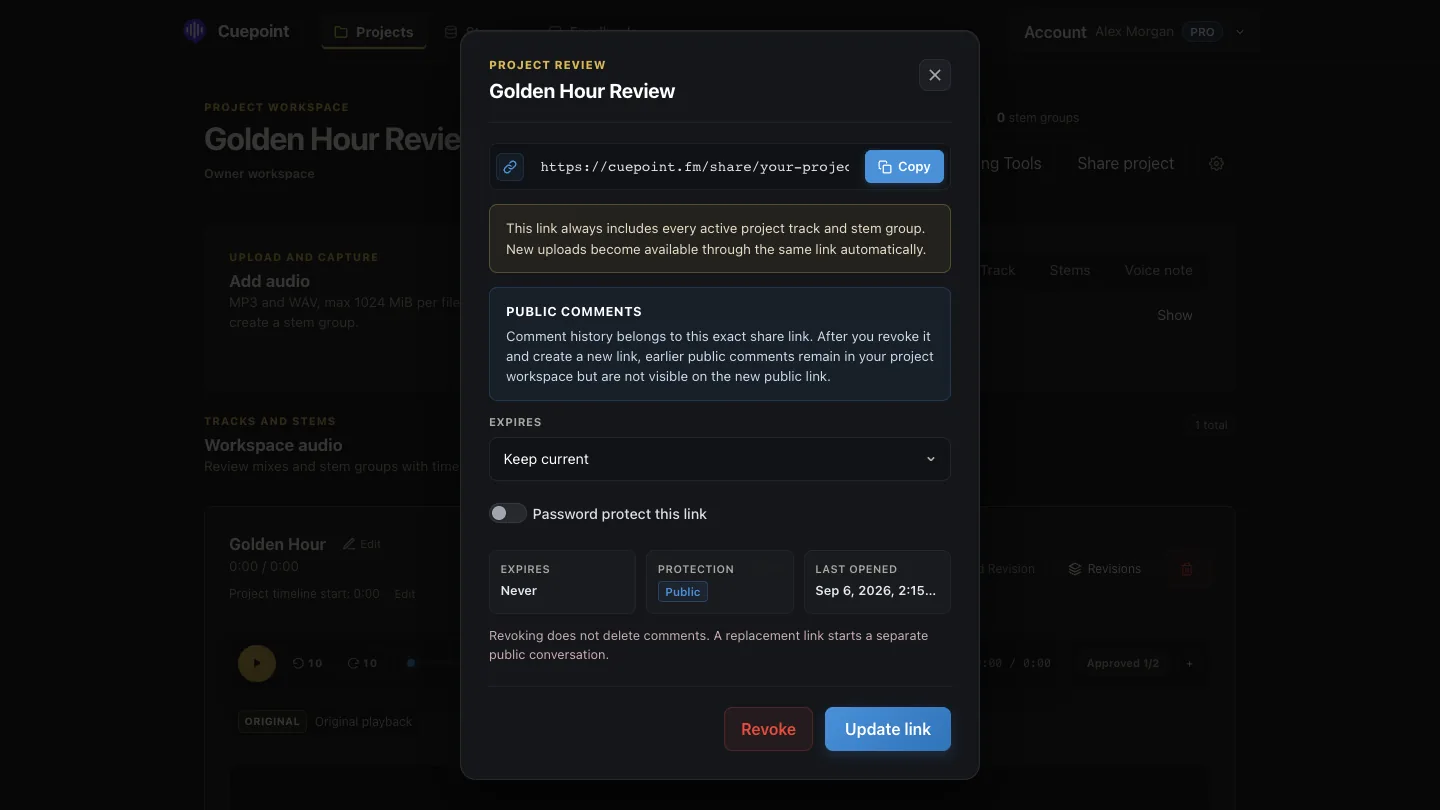
How to Share a Mix With a Client for Review
Send a focused listening experience that makes the next action obvious.
Read the guide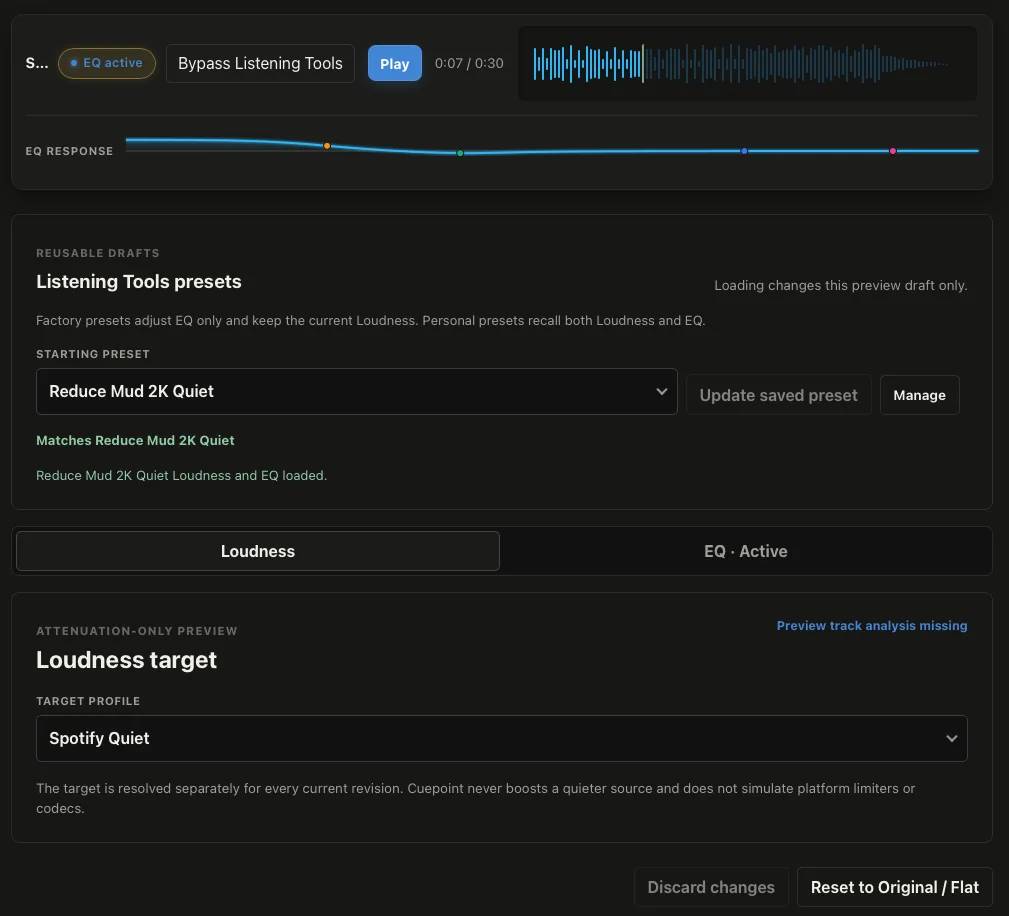
How to Compare Mix Revisions Without Losing Context
Review the change against the original question instead of starting from memory.
Read the guide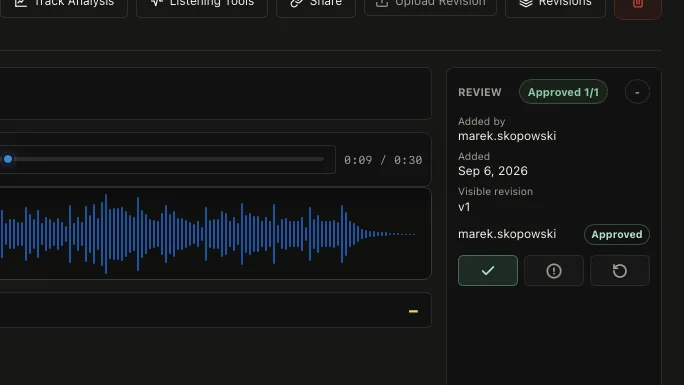
How to Get a Clear Mix Approval From a Client
Separate comments from the final decision and make sign-off unmistakable.
Read the guide
Loudness vs Tonal Balance: What Are You Actually Hearing?
Separate level from frequency balance before deciding what needs to change.
Read the guide
Why Your Mix Sounds Different in the Car—and What to Check
Use the car test as evidence, then return to the studio with a focused question.
Read the guide