 Cuepoint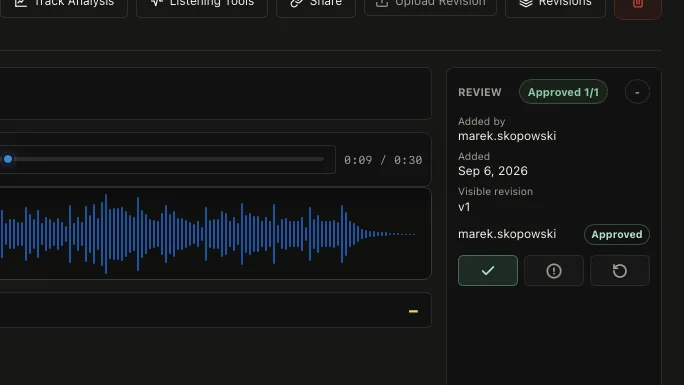
Define who can approve the mix
Agree on the decision-maker before the final review. An artist, manager, label, producer, and featured performer may all have useful feedback, but the mixer should not have to infer whose answer closes the work.
If several approvals are required, name them. If one person consolidates the group, make that responsibility explicit. This prevents a late stakeholder from appearing after delivery with feedback that was never included in the review.
Make the current version unmistakable
The approval request should point to one specific version. Include a short list of the changes since the previous pass and remove old links from the active conversation where practical.
The client knows what changed, what to hear, and how to respond.
Finish the feedback round before asking
Do not combine “send any thoughts” and “please approve” in the same vague request. First collect and resolve the review notes. Then ask for a decision on the current version.
If changes remain, ask the client to identify them at the relevant timestamps. “Needs changes” without a note is as ambiguous as silence. A finite open list keeps the next pass controlled.
Use explicit approval language
Phrases such as “sounds great,” “love it,” and “much better” express a reaction, but they may not authorize final delivery. Use a clear statement:
“I approve Mix 04 for final delivery.”
For less formal work, a visible Approved decision is enough as long as everyone understands what it means. The goal is not legal ceremony; it is eliminating uncertainty.
Separate approval from mastering and delivery
State what is being approved. A mix approval may confirm balances and creative processing before final mastering. A master approval may confirm the release-ready file. If alternate versions or stems are still being prepared, list them as delivery tasks rather than treating the main mix as unfinished.
This prevents a technical export request—such as an instrumental or clean version—from accidentally reopening an approved creative mix.
Handle new ideas as new scope
A client may approve the mix and later have a genuinely useful idea. That does not erase the approval. Record the new request, explain its effect on schedule or revision limits when relevant, and decide together whether to reopen the work.
Clear scope is not hostile. It helps both sides distinguish correction from exploration and keeps a good relationship from becoming an endless loop.
Keep the decision beside the audio
An approval buried in a message thread can be difficult to match to the exact file months later. Store the decision with the version it describes. Preserve the final feedback and the approved source used for delivery.
Cuepoint Pro supports per-user Approved and Needs changes decisions for tracks, stems, and revisions. Those decisions remain visible alongside the audio and comment history, giving the team one shared answer about what happens next.
Make the final decision visible.
Use Cuepoint to move from open notes to an unmistakable approval.
Start free