 Cuepoint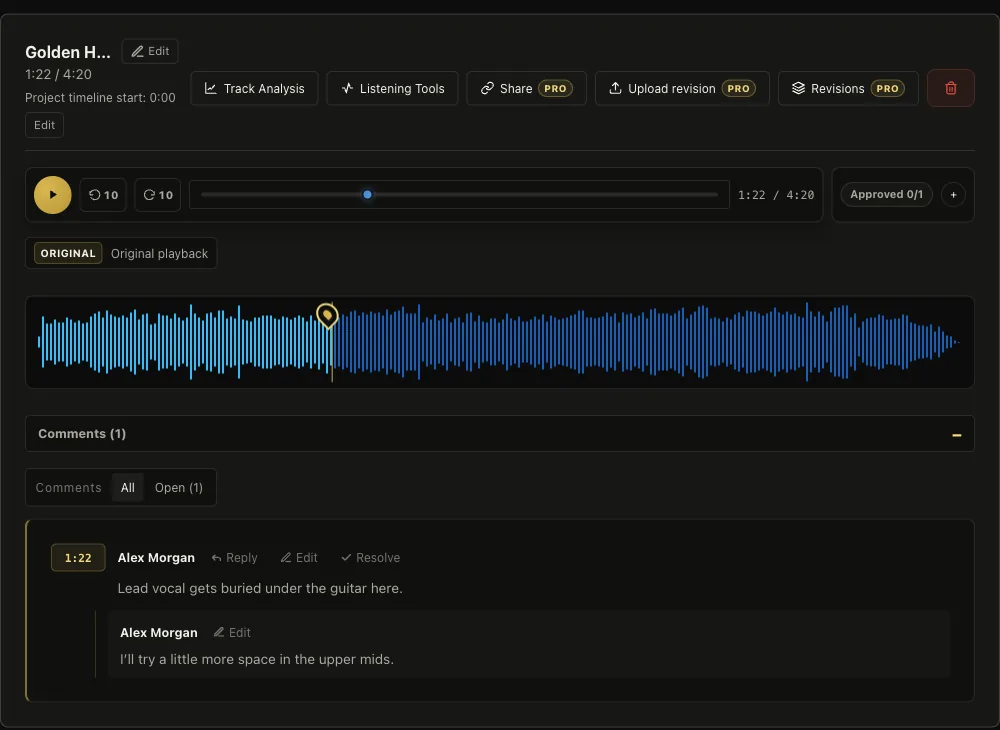
The hidden cost of finding the note
“The vocal is too loud in the chorus” sounds clear until the track has three choruses, changing harmonies, and a final double. The producer listens through each section, guesses which moment caused the reaction, and may change more of the mix than the reviewer intended.
If the note arrives in a separate message, another question appears: which audio file was playing when it was written? A small ambiguity can create another conversation before any audio work begins.
A timestamp creates a shared reference
A timestamp gives everyone a stable starting point. The producer can open the comment, hear the surrounding phrase, and compare the note with the arrangement. Replies stay about the same moment rather than becoming a new thread with another approximate location.
The seconds saved are not the main benefit
Jumping straight to 1:18 is convenient. The larger benefit is confidence. Both people know they are discussing the same event, so the producer can make a precise change and the reviewer can check that change on the next version.
This becomes increasingly important with longer material. A three-minute song may survive vague directions. A podcast episode, live recording, film mix, or album review quickly becomes exhausting when every note needs to be searched for manually.
Context still matters
A timestamp should not reduce listening to isolated seconds. Most mix decisions depend on what happens before and after the marked point. The note should open at the moment while leaving the surrounding audio easy to hear.
Describe the musical landmark as well as the number. “2:06, second chorus, first snare hit” remains understandable if the intro changes slightly in a later arrangement or if someone is reading a printed revision list.
Use one note for one issue
Timestamped feedback is easiest to resolve when each marker represents one question. If the vocal is masked at 1:18 and the cymbal is harsh at 1:26, create two comments. The issues may need different changes and different answers.
Replies are useful for clarification, not for adding a new request at a distant point in the song. A fresh marker keeps the review list scannable and makes it possible to see which decisions remain open.
What a strong timestamped comment contains
- The location: the exact time and musical event.
- The observation: what becomes audible at that point.
- The intention: what the listener should experience instead.
For example: “0:47 — when the bass enters, the kick loses definition. Can the pulse stay as clear as it is in the intro?” This is more useful than a technical guess because it preserves room for the mixer to diagnose the cause.
Keep the marker with the revision
The fastest review still fails if comments become detached from the version they describe. Store the audio, timestamped thread, and revision history together. When the new mix arrives, review it against the original question rather than rebuilding the context from chat.
Cuepoint places comment markers over the waveform and connects them to their threads. Selecting a marker seeks to the relevant point, and revisions remain part of the same track history. The result is a listening conversation that points back to the sound.
Make every note easy to find.
Put timestamped comments and revision context beside your audio in Cuepoint.
Start free