 Cuepoint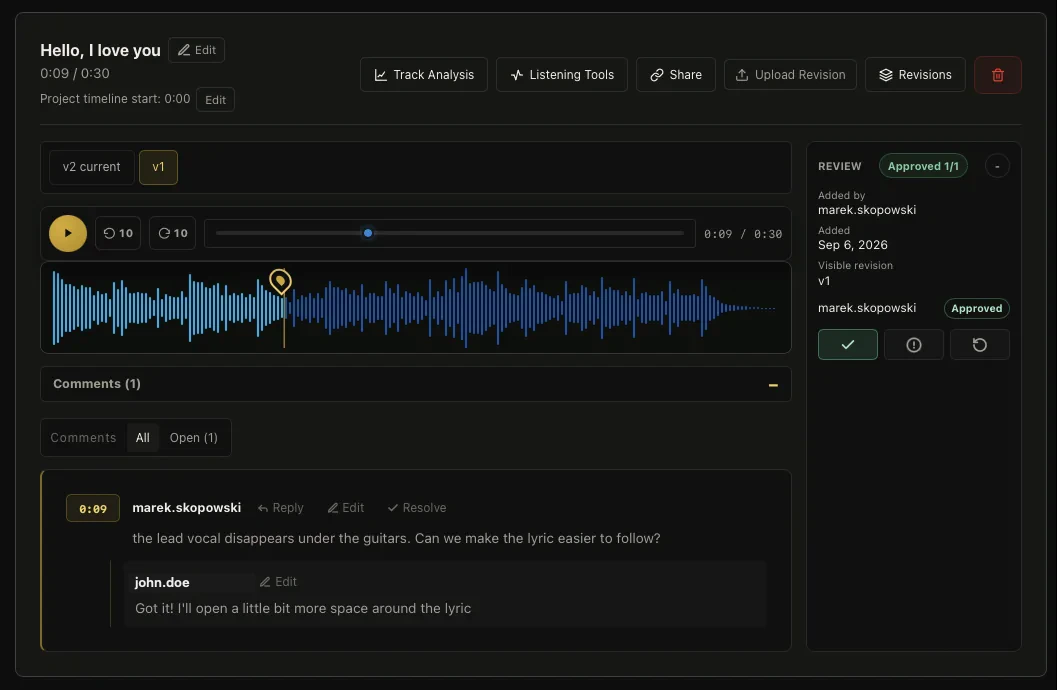
1. Define what is ready for review
Do not send a bounce with only “What do you think?” Explain the stage of the work. Is this the first full mix, a vocal-focused revision, or the final check before delivery? Tell the reviewer what is settled and where you still want input.
A short boundary prevents feedback on decisions that are intentionally unfinished and helps the client listen with purpose.
2. Collect one complete round of notes
Give reviewers one current version and one place to respond. Ask for timestamped notes and a reasonable deadline. If several people represent the client, agree who will resolve conflicting requests before they reach the producer.
Avoid beginning the revision after the first message if more feedback is expected. Mixing between scattered comments creates moving targets and makes it difficult to know which change belongs to which review round.
3. Turn the comments into a revision list
Read the complete round before opening the session. Group the notes into three simple types:
- Required changes: clear blockers before approval.
- Questions: comments that need clarification.
- Ideas to test: useful suggestions that may not survive comparison.
Resolve duplicates and contradictions first. Then make the smallest coherent group of changes that answers the feedback. A revision should be more than a new export number; it should represent a specific response to a known set of notes.
4. Upload a new revision, not a new mystery file
Keep the new bounce under the same track identity. Note what changed in plain language, and do not overwrite the previous version. The earlier mix is valuable evidence when someone asks whether the vocal was better before or whether a change solved the original concern.
This is enough context for the next listener. It does not need to become a complete engineering log.
5. Review the change against the original question
The next pass should begin with the unresolved notes, not another unrestricted critique of the whole production. Listen around each marked moment and ask whether the intended result was achieved. Then hear the track once from beginning to end so that local fixes are judged in musical context.
New issues can be real, but distinguish them from a changing preference. If the brief changes, say so explicitly. That keeps the scope visible and prevents the producer from treating every new idea as a failure of the previous revision.
6. End with a decision
Close each round with either approval or a finite list of remaining changes. “Sounds great” is friendly; “Mix 03 is approved” is operationally clear. Once approved, preserve that state and prepare the agreed deliverables instead of continuing to revise by habit.
Cuepoint Pro keeps revisions in one track history and supports per-user Approved and Needs changes decisions. Timestamped comments and replies remain close to the audio, so the next version can be checked against the conversation that produced it.
Keep every revision in context.
Use Cuepoint to connect versions, listening notes, and the final decision.
Start free